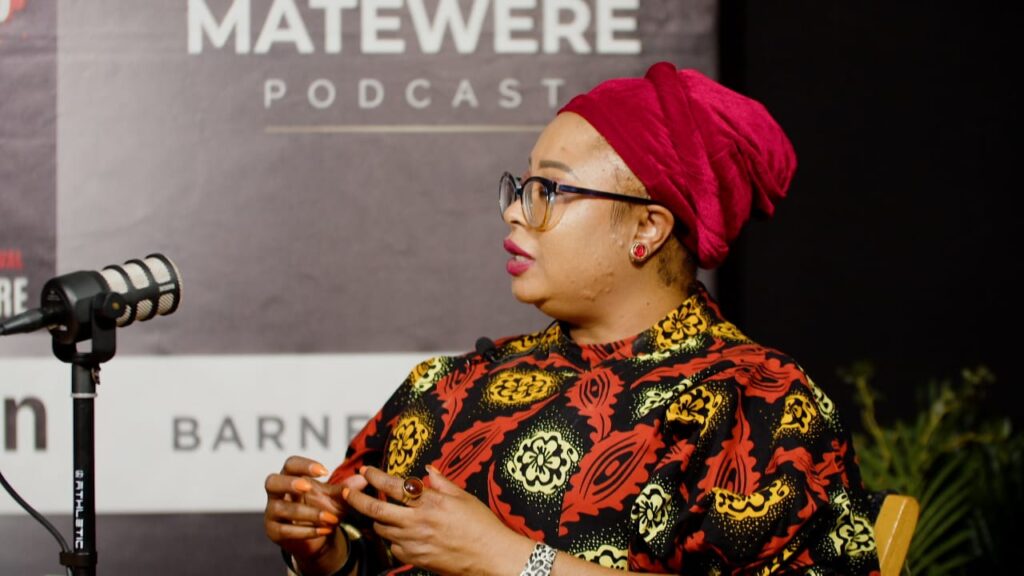
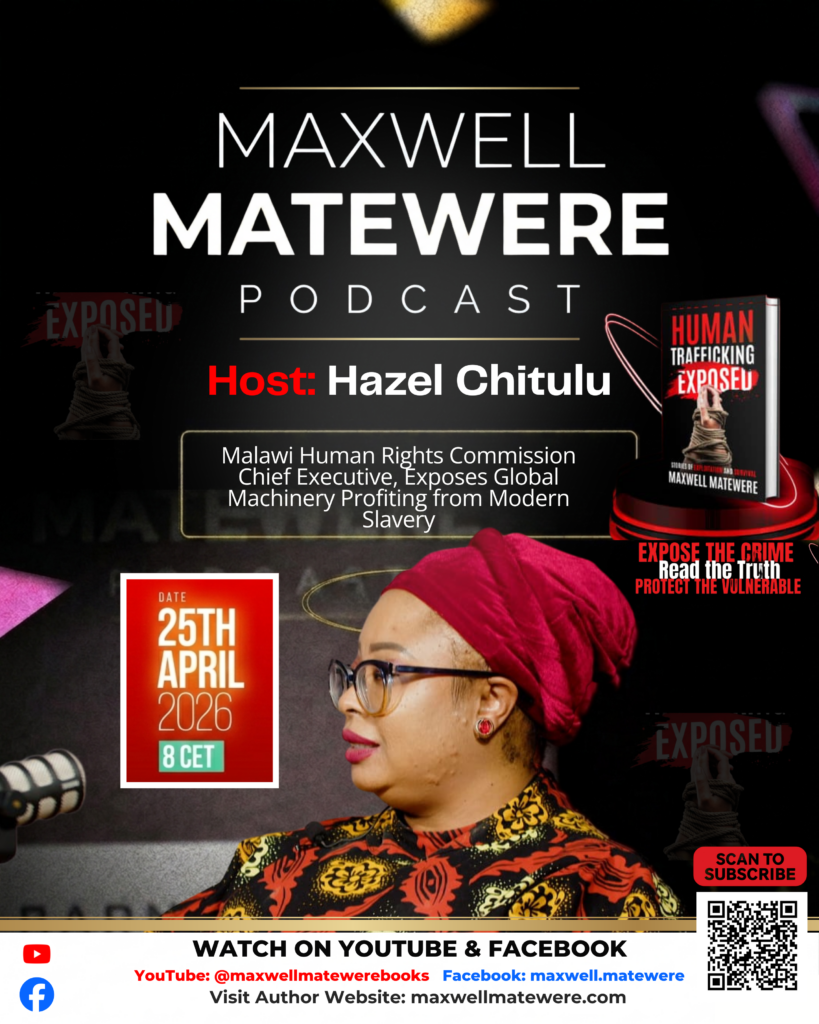
Today, we are pleased to engage the first guest on the Maxwell Matewere Podcast, Ms. Habiba Osman, a human rights lawyer and the Chief Executive Officer of the Malawi Human Rights Commission.
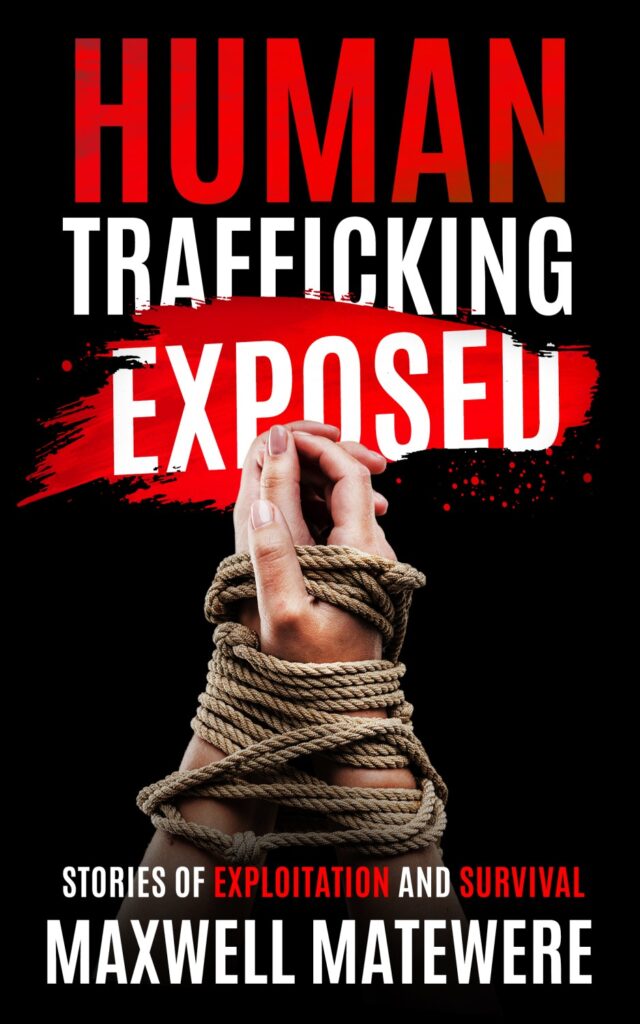
Habiba urges the global world to take seriously the evidence provided in the educative book, “Human Trafficking Exposed.”, which reveals credible red flags that cannot be ignored.
The Malawi Human Rights Commission has a constitutional mandate under Chapter IX of the constitution, operationalised through the Human Rights Commission Act of 1998, to promote and protect human rights, particularly for vulnerable groups like children.
In practical terms, this means the commission plays a preventive, investigative, advocatory, and accountable role in the adoption system.
The commission investigates child rights violations, including allegations of illegal adoption and trafficking as covered in chapter 5 of “Human Trafficking Exposed.”
In fact, as recently as mid-2025, the High Court in Blantyre directed the commission to investigate specific adoption cases, such as the story of one adoptive mother who uncovered a truth no one wanted exposed: The Battle Against Human Trafficking.
The commission also monitors adoption processes and childcare institutions. This includes monitoring orphanages, foster care systems, and court processes to ensure that children are not unlawfully removed or placed in situations that expose them to trafficking.
Habiba shares highlights of the Human Rights Commission’s monitoring reports released in 2011, 2013, 2014, 2017, and 2021, when children in institutional care faced heightened risks. The commission uncovers irregularities, data gaps, or risky practices that indeed put children at the mercy of organised criminals as exposed in the book.
The report exposes alarming findings that uncover global systemic failures rather than a single error. Her careful analysis of multiple, uncoordinated actors involved in adoption; courts, social welfare, childcare institutions, and adoption agencies—who maintain their own records, often with different figures, is quite informative.
According to Habiba, in some cases, adopters appear to work with certain actors while bypassing others. There have been alarming inconsistencies in data between the court and the social welfare services, creating serious loopholes which have led to the failure of tracing 400 children and babies who were adopted from Malawi. This is unacceptable in any child protection system.
Calling for immediate action against illegal intercountry adoptions, Habiba says there are risks and irreversible impacts on children and babies involved in illegal adoption, some of which are: loss of their legal identity, family ties, nationality, inheritance rights, and the possibility of reuniting with their biological families. Many are exposed to medical neglect, exploitation, physical, emotional, and sexual abuse.
As also covered in the book, Habiba points out that illegal adoption systems enable profit-driven exploitation, where children are treated as commodities rather than rights holders.
“At a systemic level, weak post-adoption oversight—especially in international placements—means that once a child leaves Malawi, there may be no effective monitoring or protection at all. Ultimately, these failures erode public trust in childcare institutions, social services, and the justice system, which constitute a serious breach of obligations under international instruments such as the UN Convention on the Rights of the Child and the African Charter on the Rights and Welfare of the Child.”
Key Questions Habiba Answers in the Podcast:
- A well-documented report by the Malawi Human Rights Commission published on 27th June 2025, highlighted a sharp increase in the use of intercountry adoptions indicating that close to 400 children and babies adopted between the years 2017 to 2024 cannot be traced. How is this possible?
- Is it true that the final destinations for babies and children are unknown, while others show a noticeable concentration in countries such as the United States and Brazil, which authorities—including Homeland Security structures—have flagged as concerning?
- Is there a connection between these adoption gaps and child trafficking or illegal intercountry adoption?
- What are the risks associated with child trafficking and illegal adoption?
- Does the Human Trafficking Exposed book provide necessary background information and evidence about these cases of human trafficking and illegal adoption?
The podcast will be aired on Friday 25th April 2026 on the Maxwell Matewere Books Youtube Channel and Facebook page. Don’t miss it. Scan and subscribe now.